

Key Points
- A legitimate yellow tablet marked 355 U is commonly identified as tramadol 50 mg, a prescription opioid analgesic.
- Tramadol can cause dependence, seizures, serotonin syndrome, respiratory depression, and dangerous interactions, while counterfeit pills may contain something else entirely.
- How Brooks helps: Brooks provides opioid-use assessment, supervised detox, residential care, and dual-diagnosis treatment when tramadol use becomes unsafe or difficult to stop. Brooks also offers sober living for structured recovery housing and peer support, based on individual needs.
Finding an unfamiliar pill can be concerning, especially when the imprint code does not immediately reveal what medication it is.
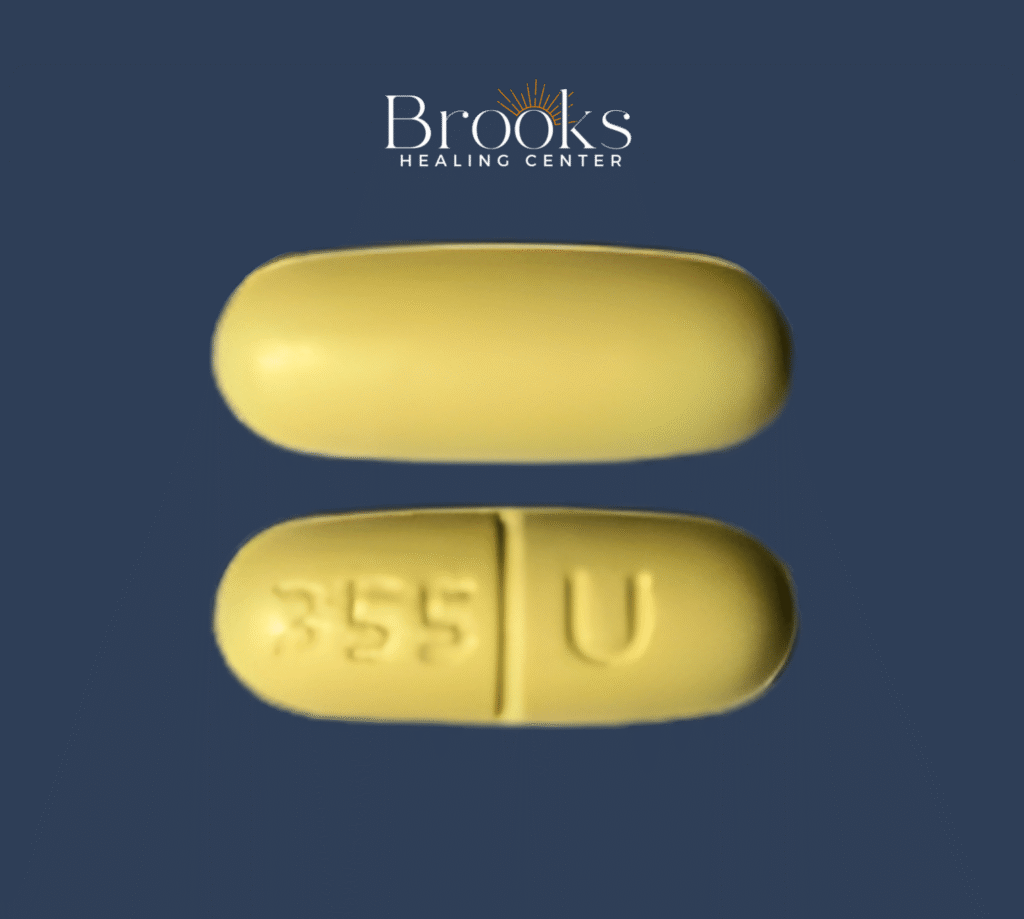
This pill is commonly identified as tramadol hydrochloride 50 mg, a prescription opioid medication used to treat moderate pain. Understanding what this pill is, how it works, and the risks associated with tramadol is important for both medication safety and awareness of potential misuse.
Pill Identification: 355 U Tablet
| Feature | Description |
|---|---|
| Imprint | 355 U |
| Color | Yellow |
| Shape | Oblong/Oval |
| Medication | Tramadol hydrochloride |
| Strength | 50 mg |
| Drug Class | Opioid analgesic |
| Common Use | Treatment of moderate pain |
| Controlled Substance | Yes – Schedule IV in the United States |
The 355 U pill is manufactured by Unichem Pharmaceuticals and contains tramadol, a medication prescribed for short-term or chronic pain management.
Because tramadol affects opioid receptors in the brain, it carries risks related to dependence, misuse, and withdrawal.
What Is Tramadol?
Tramadol is a synthetic opioid analgesic used to treat moderate to moderately severe pain. It works differently from many traditional opioids because it affects both:
- Mu-opioid receptors in the brain
- Neurotransmitters such as serotonin and norepinephrine
This dual mechanism can help reduce pain signals in the nervous system. Doctors may prescribe tramadol for conditions such as:
- Injury-related pain
- Post-surgical pain
- Chronic musculoskeletal pain
- Certain nerve pain conditions
Although tramadol is considered less potent than some opioids, it still carries risks.
Why Tramadol Is a Controlled Substance
Tramadol is classified as a Schedule IV controlled substance in the United States due to its potential for misuse and dependence.
Repeated use can lead to:
- Tolerance
- Physical dependence
- Withdrawal symptoms
- Psychological cravings
Some individuals misuse tramadol because it can produce mild euphoric effects in higher doses. However, taking tramadol outside of medical supervision can increase the risk of serious health complications.
Risks Associated With Tramadol
Although tramadol is commonly prescribed, it can cause side effects and complications, particularly if misused.
Possible side effects include:
- Nausea
- Dizziness
- Constipation
- Headaches
- Drowsiness
More serious risks may include:
- Respiratory depression
- Seizures, especially at high doses
- Serotonin syndrome when combined with certain medications
- Dependence and withdrawal
Because tramadol affects serotonin levels, it may interact with antidepressants and other medications.
Tramadol and Alcohol
Combining tramadol with alcohol can be dangerous. Both substances affect the central nervous system and may increase the risk of:
- Extreme drowsiness
- Impaired breathing
- Loss of coordination
- Overdose
Mixing opioids and alcohol significantly increases the risk of life-threatening respiratory depression. For this reason, alcohol should be avoided while taking tramadol.
Tramadol and Other Opioids
Tramadol is sometimes compared with other opioid medications used for pain treatment.
| Medication | Type | Relative Strength |
|---|---|---|
| Tramadol | Synthetic opioid | Mild to moderate |
| Hydrocodone | Opioid | Moderate |
| Oxycodone | Opioid | Moderate to strong |
| Morphine | Opioid | Strong |
Although tramadol is generally considered weaker than many opioids, it can still lead to dependence and misuse.
You can learn more about tramadol’s risks in our article on Ultram vs tramadol, which explains the differences between brand-name and generic versions of this medication.
Signs of Tramadol Misuse
Misuse of tramadol can develop gradually. Some warning signs may include:
- Taking higher doses than prescribed
- Using the medication without a prescription
- Seeking multiple prescriptions from different providers
- Experiencing withdrawal symptoms when stopping the medication
- Using tramadol to cope with stress or emotional discomfort
Recognizing these signs early can help individuals seek support before addiction develops.
Finding Help for Opioid Dependence
Prescription opioids like tramadol can lead to dependence in some individuals. Treatment programs can help people safely stop opioid use and develop long-term recovery strategies.
At Brooks Healing Center, treatment programs for opioid use disorder may include:
- Medical detox
- Residential treatment
- Partial Hospitalization
- Therapy for co-occurring mental health conditions
- Medication-assisted treatment when appropriate
Recovery from opioid dependence is possible with the right support and treatment plan.
Frequently Asked Questions About the 355 U Pill
What Is the 355 U Pill?
The pill marked 355 U is a white round tablet containing tramadol hydrochloride 50 mg. Tramadol is a prescription opioid medication used to treat moderate pain. It works by affecting opioid receptors in the brain and altering how the body perceives pain.
Is the 355 U Pill a Narcotic?
Tramadol is considered an opioid analgesic, which means it affects opioid receptors in the brain. In the United States it is classified as a Schedule IV controlled substance, meaning it has a lower risk of misuse than stronger opioids but still carries dependence potential.
What Should I Do If I Find a 355 U Pill?
If you find a pill marked 355 U and are unsure why it is present, it is safest not to take it. Medications should only be taken if they are prescribed specifically for you. A pharmacist or healthcare provider can help verify the pill and determine whether it should be safely disposed of.
Is the 355 U Pill Used for Pain?
Yes. Tramadol 50 mg tablets like the 355 U pill are typically prescribed to treat moderate pain. Doctors may prescribe it for injury-related pain, post-surgical pain, or certain chronic pain conditions.
Sources
- U.S. National Library of Medicine. (2024). Hydrocodone and acetaminophen: MedlinePlus drug information. MedlinePlus. https://medlineplus.gov/druginfo/meds/a601006.html
- Drugs.com. (2025). 355 U pill — acetaminophen and hydrocodone bitartrate 325 mg / 7.5 mg. https://www.drugs.com/imprints/355-u-17723.html
- U.S. Drug Enforcement Administration. (2023). Drugs of abuse: Hydrocodone. https://www.dea.gov/factsheets/hydrocodone
- U.S. Food and Drug Administration. (2023). Acetaminophen information. https://www.fda.gov/drugs/information-drug-class/acetaminophen-information
- National Institute on Drug Abuse. (2021). Prescription opioids: DrugFacts. https://nida.nih.gov/publications/drugfacts/prescription-opioids
- U.S. Drug Enforcement Administration. (2024). One pill can kill. https://www.dea.gov/onepill
- Substance Abuse and Mental Health Services Administration. (2023). Medications for opioid use disorder: Treatment improvement protocol (TIP) 63. https://store.samhsa.gov/product/tip-63-medications-opioid-use-disorder/PEP21-02-01-002