

Key Points
- Tianeptine is sold in some convenience and smoke-shop products despite opioid-receptor activity at high or repeated doses.
- Products can cause rapid tolerance, dependence, severe withdrawal, overdose, and unpredictable risk from labeling, formulation, or polysubstance use.
- How Brooks helps: Brooks provides opioid-focused detox, residential treatment, dual-diagnosis care, and MAT assessment for tianeptine dependence. Brooks also offers its Partial Hospitalization Program (PHP) for continued clinical treatment and sober living for structured recovery housing and peer support, based on individual needs.
Across convenience stores, vape shops, and online retailers, a substance called tianeptine has gained attention under various brand names. Marketed as a mood booster, cognitive enhancer, or stress relief supplement, it is often sold in capsule or liquid form.
But in addiction treatment settings, tianeptine has earned a very different reputation.
Because of how it acts in the brain, tianeptine has been associated with opioid-like effects, dependence, and severe withdrawal symptoms. In some states, it has already been banned. In others, it remains easily accessible.
At Brooks Healing Center, we believe education is protection. Here’s what you need to know.
What Is Tianeptine?
Tianeptine is an antidepressant developed in the 1960s and used medically in parts of Europe, Asia, and Latin America. It is not approved by the FDA for any medical use in the United States.
Although it was originally described as affecting serotonin, researchers later discovered that tianeptine also acts as a mu-opioid receptor agonist at higher doses. These are the same receptors targeted by:
- Morphine
- Oxycodone
- Heroin
- Fentanyl
This opioid activity is what makes it especially concerning.
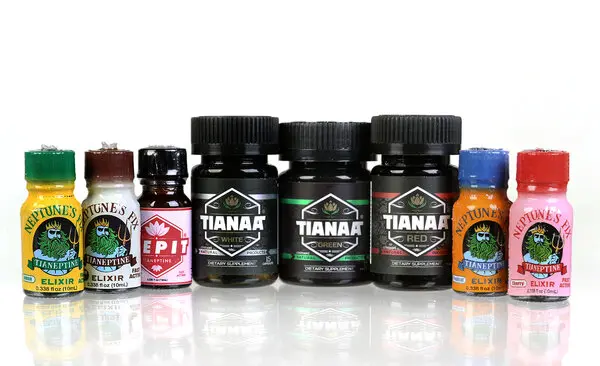
Why Is Tianeptine Called “Gas Station Heroin”?
The nickname comes from two factors:
- It is sold legally in some retail settings.
- At higher doses, it can produce opioid-like effects including euphoria and sedation.
These effects may include:
- Warmth or relaxation
- Mood elevation
- Reduced emotional distress
- Sedation
- Physical dependence
With repeated use, tolerance develops. Users often increase dosage to maintain the same effects, which significantly raises risk.
How Tianeptine Is Sold in the U.S.
Unlike prescription opioids, tianeptine products are often labeled as:
- Mood supplements
- Cognitive enhancers
- Stress relief capsules
- Energy shots
Because it is sold as a supplement, dosing and purity are inconsistent.
Table 1. Common Brand Names and Products Containing Tianeptine
Product availability changes frequently due to state bans and enforcement actions.
| Brand Name | Typical Form | Retail Setting | Notes |
|---|---|---|---|
| ZaZa (Red, Silver, White) | Capsules | Convenience stores, vape shops | One of the most widely known brands |
| Tianna / Tianaa | Capsules | Gas stations, online retailers | Frequently referenced in dependency reports |
| Neptune’s Fix | Liquid shots | Smoke shops, convenience stores | FDA warning issued in 2023 |
| Pegasus | Capsules | Vape shops | Sold as mood support product |
| TD Red | Capsules | Gas stations | Marketed as energy or mood supplement |
| Zaza Liquid (various variants) | Liquid | Convenience stores | Concentrated form increases misuse risk |
Formulations change often. Some products are reformulated after enforcement actions.
Why Is Tianeptine Dangerous?
The primary concern is its opioid receptor activity. At higher doses, it can:
- Produce euphoria
- Cause respiratory depression
- Lead to rapid tolerance
- Create physical dependence
Withdrawal symptoms may resemble opioid withdrawal and can include:
- Severe anxiety
- Muscle aches
- Sweating
- Insomnia
- Nausea
- Diarrhea
- Intense cravings
Some individuals report needing increasingly high doses multiple times per day just to avoid withdrawal symptoms.
Tianeptine and Polysubstance Use
Tianeptine is often used alongside:
- Alcohol
- Benzodiazepines
- Kratom
- Prescription opioids
Combining central nervous system depressants increases overdose risk. Because it is sold as a supplement, individuals may underestimate its potency and interaction risks.
Regulatory Status
Tianeptine is:
- Not FDA approved in the U.S.
- Restricted or banned in multiple states
- Subject to FDA warnings regarding safety and marketing
Several states, including Tennessee, have taken action to restrict or ban tianeptine sales due to rising dependence concerns. However, products may still appear in certain retail environments.
Federal Action: The Prohibiting Tianeptine and Other Dangerous Products Act of 2026
On February 5, 2026, bipartisan legislation was introduced in both the U.S. House and Senate seeking to ban tianeptine at the federal level. The bill, formally titled the Prohibiting Tianeptine and Other Dangerous Products Act of 2026, would amend the Federal Food, Drug, and Cosmetic Act to prohibit the introduction of tianeptine into interstate commerce as a dietary supplement.
If passed, this would effectively close the regulatory gap that has allowed tianeptine products to remain on store shelves despite repeated FDA warnings. The bill is currently pending in the Senate Committee on Health, Education, Labor, and Pensions and the House Committee on Energy and Commerce.
Tennessee and Kentucky have already acted at the state level. Federal classification would bring uniform enforcement across all states where tianeptine products remain accessible.
What We See at Brooks Healing Center
At Brooks Healing Center, we have seen individuals use tianeptine:
- As a substitute for opioids
- During attempts to self-manage withdrawal
- To cope with untreated depression or trauma
- As part of broader polysubstance patterns
What begins as a legal purchase can quickly become daily use driven by withdrawal avoidance. Our approach includes:
- Medical detox when necessary
- Medication-assisted treatment
- Trauma-informed therapy
- Dual diagnosis care
- Education about how substances affect the brain
Recovery requires stabilization, not substitution.
Final Thoughts on Tianeptine
Tianeptine is not just a supplement. At higher doses, it acts on opioid receptors and carries real dependence and withdrawal risks. The fact that it can be purchased in convenience stores does not make it safe.
If you or someone you love is struggling with tianeptine, kratom, or other gas station drugs, evidence-based treatment can provide structure and support.
Call today to learn more about safe, medically guided recovery options.
Frequently Asked Questions About Tianeptine
What is ZaZa?
ZaZa is a brand name commonly associated with capsules sold in convenience stores and vape shops that contain tianeptine. It is often marketed as a mood booster or energy supplement. However, tianeptine acts on opioid receptors at higher doses and has been linked to dependence and withdrawal.
What is gas station heroin?
“Gas station heroin” is a nickname used to describe tianeptine products sold in convenience stores. The name comes from the fact that these products can produce opioid-like effects while being sold as supplements in certain retail settings. Despite the nickname, the risks are real, including physical dependence and withdrawal.
What is tianeptine?
Tianeptine is a prescription antidepressant used in some countries outside the United States. It is not FDA approved in the U.S. At higher doses, it acts as a mu-opioid receptor agonist, meaning it affects the same receptors targeted by opioids like morphine and oxycodone.
What is Stablon?
Stablon is the brand name for tianeptine when prescribed legally in certain countries for depression. While Stablon is regulated and dosed under medical supervision abroad, products sold in U.S. convenience stores are not subject to the same medical oversight or quality control.
Are gas station pills safe?
Not necessarily. Many so-called “gas station pills” are sold as supplements, which means they are not regulated in the same way as prescription medications. Potency, purity, and dosing can vary significantly. Some of these products have been linked to dependence, overdose risk, and withdrawal symptoms.
Is tianeptine an opiate?
Tianeptine is not classified as a traditional opiate, but it acts on mu-opioid receptors in the brain. This opioid receptor activity is what produces euphoria at higher doses and contributes to dependence risk.
Is tianeptine legal?
Tianeptine is not FDA approved in the United States. Some states have banned or restricted its sale due to safety concerns. However, in certain areas, products containing tianeptine may still be found in retail stores.
What is tianeptine made from?
Tianeptine is a synthetic compound developed in the 1960s. It is not derived from a plant like kratom. It is chemically manufactured and designed to affect brain chemistry related to mood and stress.
What is tianeptine used for?
In countries where it is prescribed, tianeptine is used to treat depression. In the U.S., it is often marketed as a mood enhancer or stress supplement, despite lacking FDA approval for these uses.
Can you drug test for tianeptine?
Tianeptine is not typically included in standard employment drug screens. However, specialized toxicology testing can detect it if specifically ordered in medical or forensic settings.
Sources
- U.S. Food and Drug Administration. (2025, May 8). FDA warns consumers not to purchase or use any tianeptine product due to serious risks.
https://www.fda.gov/drugs/drug-safety-and-availability/fda-warns-consumers-not-purchase-or-use-any-tianeptine-product-due-serious-risks - U.S. Food and Drug Administration. (n.d.). Tianeptine (Health fraud / scams).
https://www.fda.gov/consumers/health-fraud-scams/tianeptine - U.S. Food and Drug Administration. (2025, May 8). New “Gas Station Heroin” tianeptine product trend.
https://www.fda.gov/consumers/health-fraud-scams/new-gas-station-heroin-tianeptine-product-trend - Centers for Disease Control and Prevention. (2024). Cluster of severe illness from Neptune’s Fix tianeptine elixir — New Jersey, June–November 2023. Morbidity and Mortality Weekly Report.
https://www.cdc.gov/mmwr/volumes/73/wr/mm7304a5.htm - Tennessee Department of Health. (2024). Emerging Trends Report: Tianeptine (PDF).
https://www.tn.gov/content/dam/tn/health/program-areas/Tianeptine_Trend_Report_2024.pdf - Vanderbilt University Medical Center. (2022, June 10). Toxicology question of the week: What is ZaZa Red? Tennessee Poison Center.
https://www.vumc.org/poison-control/toxicology-question-week/june-10-2022-what-za-za-red - National Capital Poison Center. (n.d.). Tianeptine: Gas station heroin.
https://www.poison.org/articles/tianeptine - Wagner, M. L., et al. (2023). From antidepressant tianeptine to street drug ZaZa. (Open access).
https://pmc.ncbi.nlm.nih.gov/articles/PMC10359047/ - Edinoff, A. N., et al. (2023). Tianeptine, an antidepressant with opioid agonist effects. (Open access).
https://pmc.ncbi.nlm.nih.gov/articles/PMC10444703/ - Gassaway, M. M., et al. (2014). The atypical antidepressant and neurorestorative agent tianeptine is a μ-opioid receptor agonist. (Open access).
https://pmc.ncbi.nlm.nih.gov/articles/PMC4119213/ - Samuels, B. A., et al. (2017). The behavioral effects of the antidepressant tianeptine require the μ-opioid receptor. Neuropsychopharmacology.
https://www.nature.com/articles/npp201760 - The Poison Control Center at Children’s Hospital of Philadelphia. (2024, February). Tianeptine: Alert for PA and DE from The Poison Control Center (PDF).
https://publichealthalerts.delaware.gov/wp-content/blogs.dir/203/files/sites/203/2024/02/Tianeptine-Report_Poison-Center-Phila_Feb-2024.pdf - Associated Press. (2025). “Gas station heroin” is technically illegal and widely available. Here are the facts.
https://apnews.com/article/4c8f6b98c9c615c9236ac950ce34850c - The New York Times. (2024, January 10). ‘Gas-station heroin’ sold as dietary supplement alarms health officials. https://www.nytimes.com/2024/01/10/health/gas-station-heroin-tianeptine-addiction.html
- U.S. Congress. (2026, February 5). Prohibiting Tianeptine and Other Dangerous Products Act of 2026. H.R. 7407 / S. 3797, 119th Congress. https://www.congress.gov/bill/119th-congress/house-bill/7407/text