

Updated on: September 2, 2026 by John Ingham
Suboxone offers hope for many people struggling with opioid addiction. When properly prescribed and monitored by healthcare professionals, Suboxone can reduce cravings, minimize withdrawal symptoms, and help people maintain their recovery journey. For those feeling trapped in the cycle of addiction, Suboxone is a scientifically backed option that has helped countless people regain control of their lives and work toward long-lasting recovery.
Key Points
- Suboxone contains buprenorphine and naloxone and is an evidence-based medication used to treat opioid use disorder.
- Buprenorphine reduces opioid withdrawal and cravings by partially activating mu-opioid receptors while binding to them very strongly.
- Naloxone has limited absorption when Suboxone is taken as directed and is included primarily to discourage certain forms of misuse.
- Brooks Healing Center provides medication-assisted treatment as part of a broader opioid addiction treatment plan when clinically appropriate.
What is Suboxone, and How Does it Work?
Suboxone is a prescription medication approved by the FDA for treating opioid use disorder.[1] It contains two active ingredients working together to help people overcome opioid dependence: buprenorphine and naloxone.
Buprenorphine is a partial opioid agonist that attaches to the same brain receptors as other opioids (like heroin or prescription painkillers) but only partially activates them.[2] This helps to:
- Reduce cravings for other opioids
- Prevent withdrawal symptoms without producing the same intense high
- Lower risk of misuse, dependency, and respiratory depression
Naloxone is an opioid antagonist included in Suboxone primarily to discourage misuse by injection. When Suboxone is taken as directed under the tongue or inside the cheek, relatively little naloxone reaches the bloodstream.
If the medication is manipulated and injected, naloxone exposure is greater and may contribute to precipitated withdrawal in someone who is physically dependent on opioids. The exact response depends on the person’s opioid dependence, substances involved, and how the medication is used.
Buprenorphine has a ceiling effect for certain opioid effects, particularly respiratory depression, which generally makes it safer than full opioid agonists when appropriately prescribed. That does not make overdose impossible.
Buprenorphine can still cause dangerous respiratory depression, particularly when combined with alcohol, benzodiazepines, or other sedating drugs. Its high receptor affinity can also interfere with the effects of other opioids.
What is its Mechanism of Action?
Suboxone’s effectiveness in treating opioid use disorder stems from its unique pharmacological properties and interactions with the brain’s opioid system. The medication works through a sophisticated mechanism that provides relief from withdrawal and cravings while deterring misuse:[4]
- High receptor affinity: Buprenorphine binds tightly to mu-opioid receptors, displacing other opioids and preventing them from attaching.
- Partial activation: Unlike full opioids, buprenorphine only partially activates receptors, providing enough stimulation to prevent withdrawal without producing intense euphoria.
- Long duration: With a half-life of 24-60 hours, buprenorphine maintains stable receptor occupation, allowing for once-daily dosing.
- Ceiling effect: Buprenorphine has a ceiling effect for certain opioid effects, especially respiratory depression, but overdose remains possible.
- Kappa receptor antagonism: Buprenorphine may help improve mood and reduce stress-induced cravings by blocking kappa-opioid receptors.
- Naloxone safeguard: Naloxone has limited absorption when taken as directed; injection increases exposure and may contribute to precipitated withdrawal.
- Steady-state pharmacology: Regular dosing maintains consistent blood levels, helping to stabilize brain chemistry disrupted by addiction.
Because buprenorphine binds strongly to opioid receptors, starting it too soon after certain opioids can precipitate withdrawal. The timing and method of induction should therefore be guided by an appropriately qualified healthcare professional.
What is Opioid Use Disorder?
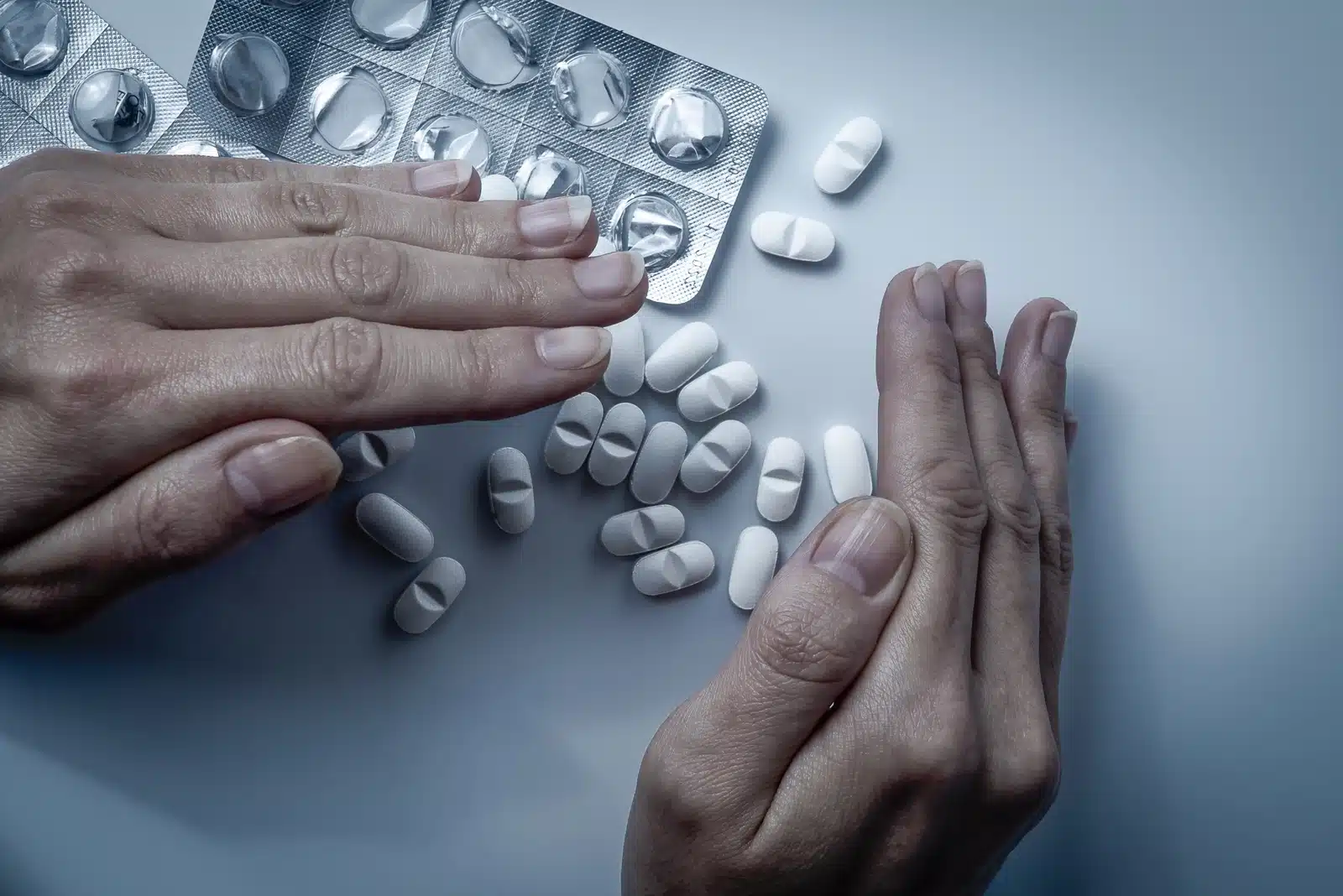
Opioid use disorder (OUD) is a medical condition that develops when a person is addicted to or dependent on either illicit or prescription opioids. It develops when repeated opioid use changes the brain’s structure and function, affecting areas responsible for reward, stress, and self-control.[5] These neurological changes often lead to intense cravings, tolerance (needing increasing amounts to achieve the same effect), and withdrawal symptoms when use is reduced or stopped.
A diagnosis of OUD is made by a professional around specific criteria outlined in the Diagnostic and Statistical Manual of Mental Disorders (DSM-5), including unsuccessful efforts to cut down use, spending significant time obtaining or using opioids, continuing use despite physical or psychological problems, and experiencing withdrawal symptoms.[6] OUD exists on a spectrum from mild to severe, depending on how many criteria are met.
This condition affects people across all demographics and socioeconomic backgrounds, challenging outdated stigmas that portray addiction as simply a moral failing or lack of willpower. Medical science recognizes OUD as a treatable medical condition requiring comprehensive care that may include medications like Suboxone, counseling, and support services.
The Benefits of Suboxone in Treatment For Opioid Addiction
Suboxone can provide a foundation for recovery while reducing the risks associated with continued opioid use or abrupt discontinuation: [7]
- Reduces withdrawal symptoms: Suboxone alleviates the intense physical and psychological discomfort of opioid withdrawal, making the early recovery period more manageable.
- Decreases cravings: By partially activating opioid receptors, Suboxone helps diminish the persistent urges that often lead to relapse.
- Blocks effects of other opioids: If someone attempts to use other opioids while on Suboxone, buprenorphine’s high receptor affinity may blunt their effects, but this does not eliminate overdose risk.
- Lowers overdose risk: The ceiling effect on respiratory depression makes Suboxone significantly safer than full opioid agonists like methadone.
- Enables normal functioning: Many people can work, drive, and maintain daily responsibilities while taking Suboxone, unlike when actively using other opioids.
- Supports long-term recovery: The stability provided by Suboxone allows individuals to focus on therapy, rebuilding relationships, and developing coping skills.
- Reduces illicit drug use: Studies show decreased use of illegal opioids and associated high-risk behaviors among those maintained on Suboxone.
- Decreases mortality: Treatment with medications like Suboxone is associated with significantly lower death rates compared to abstinence-only approaches.
- Flexible treatment settings: Unlike methadone, Suboxone can be prescribed in office-based settings, improving access to treatment.
Can Suboxone Be Misused?
Suboxone can be misused despite its inherent benefits to addiction treatment.[8] The buprenorphine component, while only a partial opioid agonist, can still produce euphoric effects, particularly in people with no opioid tolerance. This potential for misuse exists even though Suboxone was specifically formulated with naloxone to deter improper use. When taken as prescribed (under the tongue), naloxone has minimal effect, but if crushed and injected, naloxone becomes active and can trigger withdrawal symptoms.
The risk of Suboxone misuse is significantly lower than with full opioid agonists like heroin or oxycodone. However, some people may attempt to misuse Suboxone by taking higher doses than prescribed, combining it with other substances like benzodiazepines or alcohol to enhance its effects, or diverting their prescription to others. This is why healthcare providers carefully evaluate patients before prescribing Suboxone and implement monitoring strategies throughout treatment, including regular appointments, urine drug screens, and prescription tracking.
Ultimately, when used as directed under proper medical supervision, Suboxone remains a valuable and relatively safe component of opioid addiction treatment.
FAQ’s
How does Suboxone work to treat opioid use disorder?
Buprenorphine partially activates mu-opioid receptors to reduce withdrawal and cravings and binds strongly enough to interfere with other opioids. Naloxone has limited absorption when the medication is taken as directed and is included primarily to discourage certain forms of misuse. Suboxone does not eliminate overdose risk, especially when combined with alcohol, benzodiazepines, or other sedating substances.
What’s the difference between Suboxone and methadone?
Both Suboxone and methadone are FDA-approved medications for opioid dependence treatment, but they work differently. Methadone is a full opioid agonist, meaning it fully activates opioid receptors, while buprenorphine in Suboxone is only a partial agonist with a ceiling effect that limits potential overdose.
Methadone typically requires daily visits to specialized clinics, especially during initial treatment. Suboxone can be prescribed in outpatient settings by qualified healthcare providers and taken at home. This accessibility makes Suboxone treatment more convenient for many patients, allowing them to maintain work and family responsibilities while receiving care.
What side effects might I experience with Suboxone?
Common side effects of Suboxone include headache, nausea, constipation, insomnia, sweating, and drowsiness. Most side effects are mild and diminish over time as your body adjusts to the medication. More serious but less common effects may include respiratory depression (especially when combined with sedatives like benzodiazepines), liver problems, or allergic reactions. Your healthcare provider should monitor you regularly throughout treatment.
If you’re experiencing troublesome side effects, don’t stop taking Suboxone without medical advice, as this could trigger opioid withdrawal syndrome.
How long will I need to stay on Suboxone treatment?
The duration of Suboxone treatment varies greatly depending on individual circumstances. Some people benefit from short-term use during detoxification from opiates like painkillers, while others may need long-acting medication-assisted treatment (MAT) for months, years, or indefinitely.
The current medical understanding of OUD recognizes it as a chronic condition similar to diabetes or hypertension, sometimes requiring long-term management. Your treatment plan should be developed collaboratively with your healthcare provider and may include behavioral therapy, mental health support, and regular check-ins. The goal is stable recovery, not necessarily the discontinuation of medication.
Can I switch from other opioids directly to Suboxone?
Because buprenorphine binds strongly to opioid receptors, starting it too soon after certain opioids can precipitate withdrawal. The timing and method of induction should therefore be guided by an appropriately qualified healthcare professional.
A qualified healthcare professional should select the induction approach based on the opioids involved, withdrawal symptoms, medical history, and other individual factors.
Sources
[1] Entringer, S. (2023, August 23). Suboxone Uses, Dosage, Side Effects & Warnings. Drugs.com. https://www.drugs.com/suboxone.html on March 17, 2025
[2] Kumar, R., Viswanath, O., & Saadabadi, A. (2024, June 8). Buprenorphine. PubMed; StatPearls Publishing. https://www.ncbi.nlm.nih.gov/books/NBK459126/ on March 17, 2025
[3]U.S. Department of Health and Human Services. (2024a, February 12). Naloxone drugfacts. National Institutes of Health. https://nida.nih.gov/publications/drugfacts/naloxone
[4] Togioka, B. M., & Patel, P. (2024). Buprenorphine and Naloxone. PubMed; StatPearls Publishing. https://www.ncbi.nlm.nih.gov/books/NBK603725/ on March 17, 2025
[5] American Psychiatric Association. (2022, December). Opioid Use Disorder. Psychiatry.org; American Psychiatric Association. https://www.psychiatry.org/Patients-Families/Opioid-Use-Disorder on March 17, 2025
[6] DSM-5 Criteria for Diagnosis of Opioid Use Disorder Diagnostic Criteria*. (n.d.). https://www.asam.org/docs/default-source/education-docs/dsm-5-dx-oud-8-28-2017.pdf on March 17, 2025
[7] Kaplan, L. (2018). Medication-assisted treatment for opioid use disorder. The Nurse Practitioner, 1. https://www.cdc.gov/niosh/docs/wp-solutions/2019-133/pdfs/2019-133.pdf on March 17, 2025
[8] Grinspoon, P., MD. (2024, August 8). 5 myths about using Suboxone to treat opioid addiction. Harvard Health. https://www.health.harvard.edu/blog/5-myths-about-using-suboxone-to-treat-opiate-addiction-2018032014496 on March 17, 2025