

Key Points
- Yes, drugs can cause mental health symptoms, contribute to the development of certain psychiatric disorders, and worsen existing mental illnesses. However, not every mental health condition experienced by someone using drugs is caused by substance use.
- Methamphetamine, cocaine, cannabis, opioids, alcohol, benzodiazepines, and hallucinogens can affect mood, thinking, behavior, and perception in different ways.
- Substance-induced mental disorders can include psychosis, depression, anxiety, and mood disturbances that develop during or following drug intoxication or withdrawal.
- Some psychiatric symptoms improve after substance use stops, while others can persist or indicate an independent mental health condition requiring ongoing treatment.
- Mental illness and addiction can influence one another. People may use substances to cope with psychiatric symptoms, while substance use may intensify those same symptoms.
- How Brooks Healing Center helps: Brooks provides dual diagnosis treatment in Tennessee that addresses substance use disorders and co-occurring mental health conditions through individualized treatment, medical stabilization, evidence-based therapies, and continued recovery support.
Maybe you started using drugs to escape anxiety, depression, or emotional pain. Perhaps substances initially made you feel more confident, relaxed, energetic, or disconnected from problems you didn’t know how to manage. Over time, though, something changed. You may now experience panic attacks, paranoia, severe mood swings, or depression that seems much worse than before.
For some people, the changes are so significant that they begin questioning whether drug use has permanently altered their mental health. Others watch a loved one experience hallucinations, unusual behavior, or extreme emotional instability and wonder whether the drugs themselves caused a psychiatric disorder.
These concerns raise an important question: Do drugs actually cause mental illness, or do they simply make existing mental health conditions worse?
The answer is that both situations can occur. Substance use can directly produce psychiatric symptoms, increase vulnerability to certain mental disorders, and aggravate conditions that already exist. However, determining exactly what caused someone’s symptoms requires careful clinical evaluation.
Understanding this connection is important because effective treatment must address more than substance use alone.
Can Drug Use Actually Cause Mental Illness?
Understanding the Relationship Between Substance Use Disorders and Psychiatric Conditions
Yes, drug use can contribute to mental illness, but the relationship is more complicated than a simple cause-and-effect explanation.
According to the National Institute of Mental Health (NIMH), substance use and mental disorders frequently occur together because they can share risk factors, influence similar brain systems, and contribute to one another’s development.
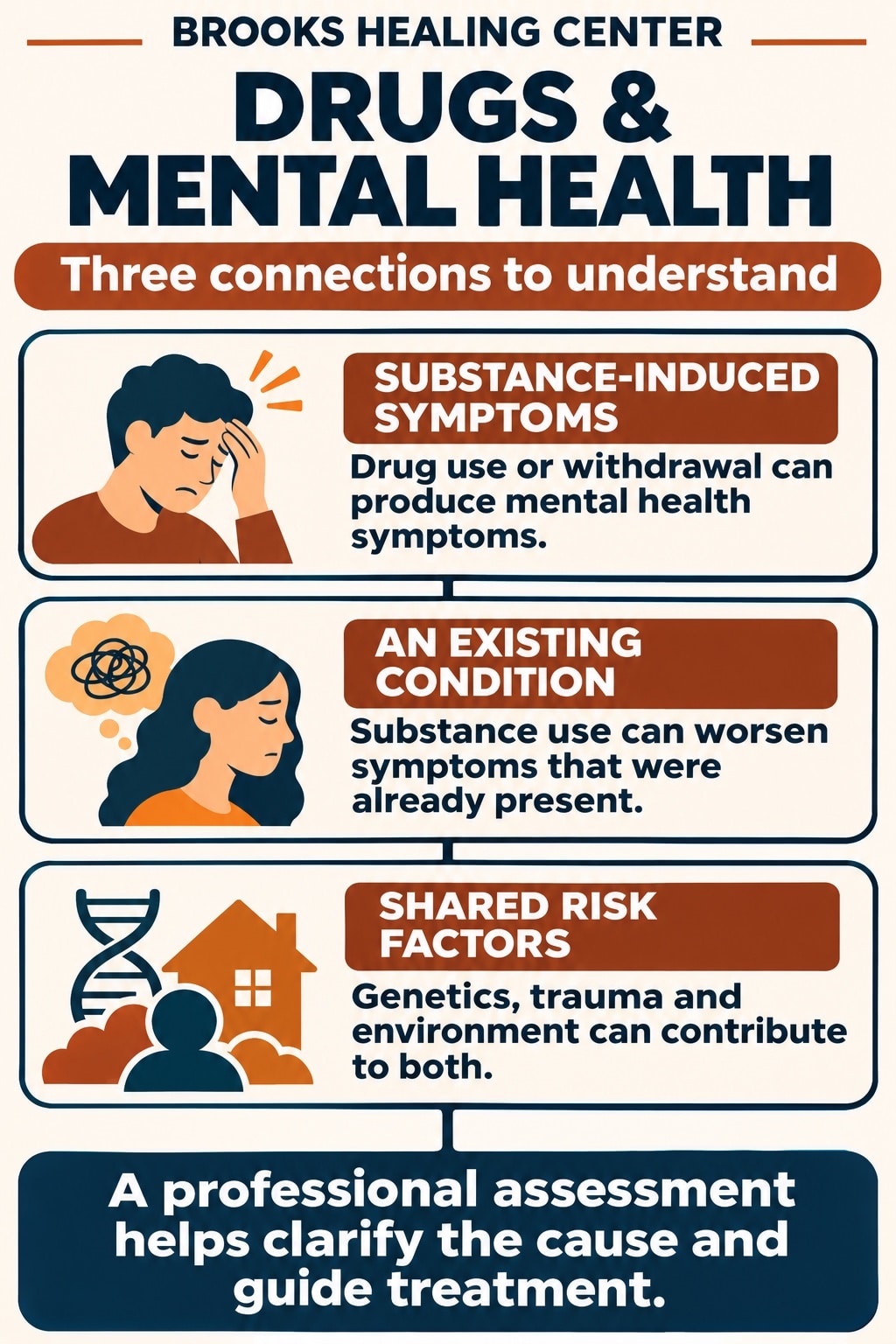
There are three primary ways these conditions may be connected:
- Substance-induced psychiatric symptoms: A drug directly causes symptoms such as paranoia, hallucinations, anxiety, depression, or changes in mood during intoxication or withdrawal.
- Substance use contributing to psychiatric vulnerability: Drug exposure may increase the likelihood that someone develops a mental health condition, particularly when genetic, developmental, or environmental risk factors are already present.
- Preexisting mental illness and substance use: Someone may experience anxiety, depression, bipolar disorder, trauma-related symptoms, or another psychiatric condition before using substances, then discover that drug use makes those symptoms more difficult to manage.
These possibilities are not mutually exclusive. An individual may have an existing psychiatric disorder and later experience additional substance-induced symptoms that complicate the original condition.
This is why clinicians evaluate both mental health and substance use rather than automatically assuming that one explains the other.
How Do Drugs Affect the Brain and Mental Health?
Understanding Neurotransmitters, Brain Function, and Changes in Emotional Regulation
Psychoactive substances affect the central nervous system by changing how brain cells communicate. Depending on the substance, these effects may involve dopamine, serotonin, gamma-aminobutyric acid (GABA), glutamate, or the body’s opioid signaling systems.
These chemical messengers participate in processes related to motivation, pleasure, mood, attention, sleep, stress responses, and perception.
For example, stimulants such as methamphetamine and cocaine can sharply affect dopamine signaling, while opioids interact with receptors involved in pain regulation and reward. Benzodiazepines enhance certain inhibitory effects of GABA, which can temporarily reduce anxiety and produce sedation.
With repeated exposure, the brain may adapt to a substance’s presence. Some individuals subsequently experience difficulty regulating emotions, responding to stress, experiencing pleasure, sleeping normally, or making decisions without continued drug use.
Sleep deprivation, nutritional problems, traumatic experiences, withdrawal symptoms, and social instability can further affect psychological functioning.
However, changes in brain signaling do not automatically mean someone has developed a permanent psychiatric disorder. The nature and duration of symptoms depend on the substance involved, pattern of use, individual vulnerability, and presence of other medical or mental health conditions.
Which Drugs Are Most Likely to Cause Mental Health Problems?
Comparing the Psychiatric Effects of Stimulants, Cannabis, Opioids, Sedatives, and Hallucinogens
Different substances are associated with different mental health risks. Some can produce temporary anxiety or mood changes, while others may lead to severe psychiatric symptoms that require emergency evaluation.
The following substances are particularly relevant when examining the relationship between drug use and mental illness.
Methamphetamine: Paranoia, Psychosis, Anxiety, and Depression
Methamphetamine is a powerful stimulant that can substantially affect dopamine signaling, sleep, and emotional regulation.
During prolonged or heavy use, some individuals experience extreme agitation, suspiciousness, paranoia, hallucinations, and disorganized thinking. These symptoms may become severe enough to meet the criteria for stimulant-induced psychosis.
Methamphetamine use can also produce intense anxiety, irritability, impulsivity, and disrupted sleep. Following heavy use, individuals may experience exhaustion, low mood, loss of pleasure, and other depressive symptoms.
Although many substance-induced symptoms improve with abstinence and appropriate treatment, psychotic symptoms can persist or recur in some individuals. A psychiatric assessment is essential when hallucinations, delusions, or other symptoms continue after methamphetamine use has stopped.
Cocaine and Crack Cocaine: Anxiety, Paranoia, and Depressive Symptoms
Cocaine and crack cocaine are stimulants that can produce temporary increases in energy, alertness, and feelings of confidence.
However, heavy or repeated use can lead to anxiety, restlessness, suspiciousness, panic, and paranoia. In severe cases, stimulant-related psychosis may involve hallucinations or delusional beliefs.
Following intense cocaine use, individuals may experience a period of fatigue, irritability, depressed mood, and reduced ability to experience pleasure. These symptoms can contribute to repeated use when someone takes more cocaine in an attempt to escape the emotional crash.
Long-term cocaine use is also associated with psychiatric complications and can aggravate symptoms in people with preexisting mood or anxiety disorders.
Marijuana and THC: Anxiety, Psychosis, and Schizophrenia Risk
Although marijuana is sometimes viewed as relatively harmless, cannabis can have clinically significant psychiatric effects.
THC, the primary intoxicating component of cannabis, can produce anxiety, panic, paranoia, and temporary alterations in perception. High doses may trigger acute psychotic symptoms in susceptible individuals.
The Centers for Disease Control and Prevention reports an association between cannabis use and psychosis, including schizophrenia. This relationship is particularly concerning among people who begin using cannabis at younger ages or use it frequently.
The evidence does not establish that cannabis causes schizophrenia in every person who uses it. Genetic vulnerability, environmental circumstances, frequency of use, and other factors may influence whether an individual develops a psychotic disorder.
Cannabis use has also been associated with depression and suicidal thoughts, although these associations do not establish that marijuana independently caused every reported mental health condition.
Opioids and Fentanyl: Depression, Emotional Changes, and Withdrawal-Related Distress
Opioids, including heroin, fentanyl, and certain prescription pain medications, act on receptors involved in pain, reward, and other physiological processes.
Some people initially experience euphoria or emotional relief while using opioids. However, repeated use and the development of physical dependence can create a cycle of cravings, withdrawal, emotional distress, and continued drug use.
Long-term opioid use is associated with depression and may aggravate existing mental health symptoms. During withdrawal, individuals commonly experience anxiety, irritability, insomnia, restlessness, and dysphoria.
For someone experiencing fentanyl addiction, mental health treatment may need to occur alongside medications for opioid use disorder and other addiction treatment services.
Opioid withdrawal can be extremely distressing, and opioid use carries significant overdose risks. Medical evaluation can help determine appropriate withdrawal management and ongoing treatment.
Benzodiazepines: Rebound Anxiety, Depression, and Withdrawal Complications
Benzodiazepines such as Xanax, Valium, and Klonopin are prescription medications used for certain conditions, including anxiety disorders and seizures.
When used appropriately under medical supervision, these medications can provide important therapeutic benefits. However, long-term use can lead to physical dependence, and misuse may contribute to cognitive impairment, emotional changes, and other complications.
Abrupt discontinuation after physical dependence develops can cause rebound anxiety, insomnia, agitation, perceptual disturbances, and potentially life-threatening seizures.
People experiencing benzodiazepine dependence should not attempt to stop suddenly without appropriate medical guidance.
A healthcare professional can determine whether a supervised taper or another treatment approach is necessary while also evaluating any underlying anxiety or mental health condition.
Hallucinogens: Changes in Perception, Anxiety, and Uncommon Persistent Symptoms
Hallucinogens include substances such as LSD, psilocybin, and certain other drugs that alter perception, sensory experiences, and thought processes.
Their effects vary significantly by substance, dose, environment, and individual vulnerability. Some individuals may experience intense anxiety, fear, confusion, or paranoia during intoxication.
Rarely, prolonged psychiatric complications can occur. Hallucinogen persisting perception disorder (HPPD), for example, involves recurring perceptual disturbances after the immediate effects of a hallucinogen have ended.
These risks should be distinguished from clinical psychedelic research, where certain compounds are being studied under controlled conditions for potential mental health benefits. Findings from supervised research should not be treated as evidence that unsupervised use is safe for everyone.
People experiencing persistent symptoms after hallucinogen use should seek an appropriate medical and psychiatric assessment.
What Mental Illnesses Can Drugs Cause or Make Worse?
Understanding Substance-Induced Psychosis, Depression, Anxiety, and Mood Disorders
The relationship between a drug and a psychiatric condition depends on the diagnosis. Some mental disorders can be directly substance-induced, while others are associated with drug use through more complicated biological and environmental pathways.
Recognizing these differences can help prevent inaccurate diagnoses and inappropriate assumptions about recovery.
Drug-Induced Psychosis
Psychosis involves difficulty distinguishing reality from experiences or beliefs that are not grounded in reality. Symptoms may include hallucinations, delusions, disorganized thinking, and significant paranoia.
Methamphetamine, cocaine, cannabis, and certain other substances can trigger psychotic symptoms. These experiences may occur during intoxication, withdrawal, or periods of prolonged substance-related disruption.
Drug-induced psychosis does not automatically mean someone has schizophrenia. However, severe symptoms may require urgent treatment, and persistent psychosis warrants evaluation for independent psychiatric conditions.
Brooks provides additional information about drug-induced psychosis treatment and the relationship between substance use and changes in perception.
Depression and Substance-Induced Depressive Disorders
Drug use can contribute to depressive symptoms through several mechanisms, including changes in reward signaling, disrupted sleep, withdrawal, chronic stress, and consequences associated with addiction.
Someone recovering from stimulant use may experience intense fatigue and emotional emptiness. Individuals dependent on opioids may experience prolonged emotional distress, while heavy alcohol use can contribute to depressive symptoms and worsen an existing depressive disorder.
Importantly, depression may also predate substance use or exist independently of it. A clinician must consider the timing, severity, and persistence of symptoms when distinguishing substance-induced depression from major depressive disorder.
Both conditions deserve appropriate assessment and treatment.
Anxiety Disorders and Panic Symptoms
Psychoactive substances can produce significant anxiety symptoms during intoxication or withdrawal.
Stimulants may trigger panic, agitation, or hypervigilance, while cannabis can cause intense fear or paranoia in some people. Withdrawal from alcohol or benzodiazepines can also produce severe anxiety and physical symptoms that resemble panic attacks.
For someone who already has an anxiety disorder, drug use may initially appear to provide temporary relief before contributing to a worsening cycle of anxiety and dependence.
Integrated treatment can address both substance use and conditions such as generalized anxiety disorder, rather than treating all anxiety symptoms as an unavoidable consequence of withdrawal.
Bipolar Disorder and Substance-Induced Mood Symptoms
Certain drugs can produce mood disturbances that resemble symptoms associated with bipolar disorder.
For example, stimulant intoxication may involve unusual energy, impulsivity, agitation, racing thoughts, and reduced sleep. The period following heavy stimulant use may involve depressed mood and exhaustion.
However, these symptoms do not automatically establish a diagnosis of Bipolar I or Bipolar II disorder. An independent bipolar diagnosis requires evaluation of the person’s mood episode history, symptom duration, substance exposure, and functioning outside intoxication or withdrawal.
Drug use may also worsen established bipolar disorder by disrupting sleep, increasing impulsivity, and interfering with treatment.
Can Drugs Cause Schizophrenia?
Understanding Cannabis, Stimulant Psychosis, and Genetic Vulnerability
Schizophrenia is a complex psychiatric disorder involving disturbances in thinking, perception, emotional expression, and other aspects of functioning.
Research has identified an association between cannabis use and increased risk of psychotic disorders, including schizophrenia. The relationship appears stronger with frequent use, earlier initiation, and other vulnerability factors.
Methamphetamine and cocaine can also trigger psychotic episodes that may resemble schizophrenia, particularly when hallucinations, paranoia, and delusions become severe.
However, a psychotic episode caused by a drug is not automatically schizophrenia, and researchers cannot assume that substance exposure alone explains every later schizophrenia diagnosis.
Some individuals may have underlying vulnerabilities that become apparent after exposure to psychoactive substances. Others may experience substance-induced psychosis without developing an independent psychotic disorder.
When symptoms continue after intoxication and withdrawal have resolved, further psychiatric assessment becomes particularly important.
Is Mental Illness Caused by Drugs Permanent?
Why Some Psychiatric Symptoms Improve While Others Require Long-Term Care
One of the most common concerns among people experiencing psychiatric symptoms after drug use is whether they will ever feel normal again.
In many cases, substance-induced symptoms improve as intoxication resolves, withdrawal is managed, sleep stabilizes, and the person receives appropriate treatment. Anxiety, depression, agitation, and some psychotic symptoms may lessen substantially during recovery.
However, there is no universal recovery timeline. Symptoms may last days, weeks, or longer depending on the substance, severity of exposure, medical complications, and presence of independent psychiatric disorders.
Some individuals experience persistent psychosis, depression, anxiety, or other psychiatric concerns that require continued treatment even after substance use has stopped.
Persistent symptoms do not necessarily mean that permanent damage has occurred. They do indicate that further clinical evaluation is needed rather than assuming that time alone will resolve everything.
Recovery from addiction and improvement in mental health are possible, but treatment should be based on the individual’s symptoms rather than promises that every psychiatric effect will disappear.
What Is the Difference Between Drug-Induced Mental Illness and a Primary Mental Health Disorder?
How Clinicians Determine Whether Psychiatric Symptoms Are Related to Substance Use
A substance-induced mental disorder develops in connection with drug exposure, intoxication, withdrawal, or medication effects. A primary mental health disorder exists independently of those factors, although substance use can still influence its severity.
Making that distinction is not always straightforward.
For example, someone experiencing paranoia after several days of methamphetamine use may have stimulant-induced psychosis. Another person may have an underlying psychotic disorder that became more noticeable or severe during substance use.
Clinical assessment considers several factors:
- Whether psychiatric symptoms existed before substance use began.
- Which substances were used, in what amounts, and for how long.
- Whether symptoms developed during intoxication or withdrawal.
- Whether psychiatric symptoms continue during sustained periods without substance use.
- Family history of psychiatric disorders.
- Previous mental health diagnoses, treatments, and hospitalizations.
- Sleep disturbances, medical conditions, medications, and other potential explanations.
The SAMHSA Treatment Improvement Protocol for Co-Occurring Disorders explains that the distinction between substance-induced and independent mental disorders may not be immediately clear.
Importantly, mental health treatment should not be withheld simply because clinicians are still determining the cause of the symptoms.
Can Mental Illness Also Lead to Drug Addiction?
Understanding Self-Medication and the Relationship Between Mental Health and Substance Use
The relationship between mental illness and addiction works in both directions.
Some individuals develop psychiatric symptoms after prolonged substance use, while others begin using drugs to cope with mental health conditions that already exist.
Someone experiencing severe anxiety may misuse sedatives to feel calmer. An individual living with depression may turn to stimulants in an effort to increase energy or temporarily improve mood. Someone experiencing trauma-related symptoms may use alcohol or opioids to avoid distressing memories.
These patterns are often described as self-medication, although the substance use may eventually become a separate disorder with its own consequences.
Over time, the short-term relief someone experiences may be followed by withdrawal, worsening symptoms, disrupted sleep, and increased dependence.
This can create a cycle in which mental health symptoms contribute to substance use, while continued substance use makes those symptoms more difficult to manage.
The clinical term dual diagnosis, also called co-occurring disorders, describes the presence of both a substance use disorder and an independent mental health disorder.
Dual diagnosis treatment at Brooks Healing Center addresses these interconnected concerns rather than assuming that treating addiction alone will resolve every psychiatric symptom.
Who Is Most Vulnerable to Drug-Related Mental Health Problems?
Risk Factors That Can Influence Psychiatric Symptoms and Substance Use Outcomes
Not everyone who uses a psychoactive substance develops a mental illness. Individual risk depends on multiple factors, and the presence of a risk factor does not mean psychiatric complications are inevitable.
Factors that may increase vulnerability include:
- Family history: Genetic susceptibility to certain psychiatric disorders may influence individual responses to drug exposure.
- Early substance use: Exposure during adolescence may be especially concerning because the brain is still developing.
- Frequency and intensity of use: Heavy, frequent, or prolonged substance use may increase the likelihood of certain psychiatric complications.
- High-potency substances: Greater drug potency can increase the intensity of intoxication and some adverse psychological effects.
- Preexisting mental health conditions: People with depression, anxiety, bipolar disorder, or psychotic disorders may experience worsening symptoms with substance use.
- Trauma and chronic stress: Adverse experiences can contribute to both mental health problems and substance use vulnerability.
- Sleep deprivation: Extended periods without adequate sleep can worsen mood instability, anxiety, cognitive impairment, and psychotic symptoms.
- Polysubstance use: Combining substances may increase medical and psychiatric risks while making symptoms more difficult to interpret.
These factors highlight the importance of individualized evaluation. Two people using the same substance may experience very different mental health outcomes.
How Are Drug-Induced Mental Illness and Addiction Treated?
Why Integrated Dual Diagnosis Care Can Be More Effective Than Treating Either Condition Alone
Treatment depends on whether symptoms are substance-induced, related to an independent mental disorder, or associated with both conditions.
The Substance Abuse and Mental Health Services Administration recommends integrated treatment for individuals experiencing co-occurring mental health and substance use disorders.
Rather than addressing addiction first and postponing mental health care, integrated treatment considers both conditions throughout recovery.
Medical Stabilization and Withdrawal Management
For individuals experiencing significant physical dependence, medically supervised detox may be necessary before participating fully in ongoing treatment.
Medical detox at Brooks Healing Center provides clinical monitoring and withdrawal management when medically appropriate.
Withdrawal from alcohol and benzodiazepines can be particularly dangerous, while opioid and stimulant withdrawal may involve substantial physical or psychological distress.
Stabilization also gives clinicians an opportunity to observe whether certain psychiatric symptoms improve as acute substance-related effects resolve.
Cognitive Behavioral Therapy and Emotional Regulation
Evidence-based psychotherapy plays an important role in treating substance use disorders and co-occurring psychiatric symptoms.
Cognitive behavioral therapy (CBT) helps individuals identify unhelpful thought patterns, recognize triggers, and develop healthier coping strategies.
Dialectical behavior therapy (DBT) may help people strengthen emotional regulation, distress tolerance, interpersonal effectiveness, and mindfulness skills.
These approaches can be incorporated into individualized care, particularly when substance use has become closely connected to anxiety, depression, impulsivity, or difficulty managing distress.
Medication-Assisted Treatment and Psychiatric Care
Some individuals benefit from medications for substance use disorders, psychiatric conditions, or both.
For opioid use disorder, FDA-approved medications such as buprenorphine can reduce withdrawal symptoms and cravings while supporting recovery. Other psychiatric medications may be considered when a clinician identifies depression, bipolar disorder, psychosis, or another condition requiring medication management.
Brooks offers medication-assisted treatment (MAT) when clinically appropriate, including injectable buprenorphine options such as Sublocade and Brixadi for eligible patients with opioid use disorder.
These medications are not treatments for every substance use disorder or psychiatric condition. Medication decisions should be individualized and made by qualified medical professionals.
Residential Treatment and Partial Hospitalization
Some individuals need a structured treatment environment because of severe substance use, psychiatric instability, repeated recurrence of substance use, or difficulty maintaining recovery in their current surroundings.
Residential addiction treatment at Brooks provides a supportive environment for therapy, recovery education, clinical care, and developing healthier routines.
When an individual no longer requires 24-hour residential services but continues to need intensive clinical support, the Partial Hospitalization Program (PHP) may provide an appropriate next step.
Treatment intensity should reflect individual needs and may change as someone progresses through recovery.
When Should Drug-Related Psychiatric Symptoms Be Treated as an Emergency?
Recognizing Psychosis, Suicidal Thoughts, and Other Immediate Safety Concerns
Not every psychiatric symptom associated with drug use requires emergency hospitalization. However, certain situations demand immediate medical attention.
Seek emergency assistance if someone experiences severe confusion, seizures, loss of consciousness, serious breathing problems, or behavior that creates an immediate danger to themselves or others.
New hallucinations, intense paranoia, extreme agitation, or an inability to distinguish reality may also require urgent assessment, especially when the person’s safety or ability to care for themselves is affected.
Suicidal thoughts or behavior should always be taken seriously, regardless of whether they occur during substance use, withdrawal, or an independent mental health condition.
In the United States, call 911 for an immediate medical emergency or call or text 988 for mental health or suicide crisis support.
People who have developed physical dependence on alcohol or benzodiazepines should not abruptly discontinue these substances without appropriate medical guidance because potentially life-threatening withdrawal complications can occur.
How Brooks Healing Center Treats Addiction and Co-Occurring Mental Health Disorders
Comprehensive Dual Diagnosis Treatment Between Nashville and Chattanooga in Normandy, Tennessee
At Brooks Healing Center, we understand that addiction and mental health challenges often develop together in ways that make both conditions more difficult to manage.
Someone experiencing depression may repeatedly use drugs to escape emotional distress, while another person may develop severe anxiety or paranoia after prolonged substance use. Others arrive with established mental health diagnoses that have become more difficult to manage because of addiction.
Our approach focuses on understanding each individual’s substance use history, psychiatric symptoms, treatment needs, and recovery goals.
Located between Nashville and Chattanooga in Normandy, Tennessee, Brooks provides individualized treatment within a supportive environment designed to encourage physical stabilization, emotional healing, and long-term recovery.
Treatment services may include:
- Medical detox: Supervised withdrawal management and stabilization when necessary.
- Residential treatment: Structured addiction and mental health care with individual and group therapeutic support.
- Dual diagnosis treatment: Coordinated approaches for substance use disorders and co-occurring psychiatric conditions.
- Medication-assisted treatment: FDA-approved addiction medications when appropriate for the individual’s diagnosis and clinical circumstances.
- Evidence-based therapies: CBT, DBT, trauma-informed therapy, and other interventions tailored to treatment needs.
- Partial hospitalization: Intensive daytime clinical treatment at our Normandy campus for eligible individuals.
- Supportive housing and sober living: Recovery-oriented housing options in Tullahoma for qualifying individuals progressing toward greater independence.
- Continued recovery planning: Support for transitions between treatment settings and connections with appropriate ongoing care.
Brooks works with individuals experiencing substance use disorders alongside mental health challenges such as depression, anxiety, bipolar disorder, PTSD, and drug-induced psychosis.
When psychiatric symptoms require a different or higher level of medical or psychiatric care than Brooks can safely provide, an appropriate evaluation and referral may be necessary.
Our admissions team can also help individuals and families verify insurance benefits and understand available treatment options before admission.
Frequently Asked Questions About Drugs and Mental Illness
Can drugs cause mental illness even if you have never had mental health problems before?
Yes. Certain substances can produce psychiatric symptoms in people without a previously diagnosed mental health disorder. For example, stimulant use may trigger psychosis, while cannabis can cause acute anxiety or paranoia. However, developing symptoms after drug exposure does not always establish that the drug caused an independent, long-term psychiatric illness.
What drugs are most likely to cause psychosis?
Methamphetamine, cocaine, cannabis, and certain hallucinogens are associated with substance-induced psychotic symptoms. The risk depends on factors such as dose, frequency, individual vulnerability, and other medical or psychiatric conditions. Psychosis requires professional evaluation regardless of the substance involved.
Can smoking marijuana cause schizophrenia?
Cannabis use is associated with an increased risk of schizophrenia and other psychotic disorders, especially among people who begin using at younger ages or use cannabis frequently. However, the relationship is complex, and cannabis use does not inevitably cause schizophrenia. Genetic vulnerability and other risk factors may influence individual outcomes.
Can drugs cause bipolar disorder?
Some substances can cause mood disturbances that resemble bipolar symptoms, including heightened energy, reduced sleep, impulsivity, agitation, and depression. However, substance-induced mood symptoms should not automatically be diagnosed as Bipolar I or Bipolar II disorder. A qualified clinician must evaluate whether an independent bipolar disorder exists.
Can drug use cause permanent anxiety or depression?
Drug use can contribute to anxiety and depressive symptoms, and some individuals experience persistent mental health problems after stopping. However, symptoms may also improve with appropriate treatment and sustained recovery. The duration depends on the individual, the substance, and whether an independent psychiatric condition is present.
How long does drug-induced psychosis last?
The duration of drug-induced psychosis varies considerably. Some symptoms resolve as intoxication ends or during early recovery, while others may persist for weeks or longer and require continued psychiatric care. Persistent or severe psychosis should never be managed through assumptions about how quickly symptoms will disappear.
Can stopping drugs make mental illness worse temporarily?
Yes. Withdrawal can involve anxiety, depression, sleep disruption, irritability, and other psychiatric symptoms that may temporarily intensify after substance use stops. Alcohol and benzodiazepine withdrawal can also cause life-threatening complications, making medical supervision important for individuals at risk.
Can someone have both drug-induced psychosis and schizophrenia?
Yes, it is possible for someone with an independent psychotic disorder to also experience substance-induced psychiatric symptoms. Drug exposure can complicate the clinical presentation, making it difficult to determine which symptoms are associated with intoxication, withdrawal, or the underlying disorder. A detailed psychiatric assessment and follow-up are important.
Does mental illness always come before addiction?
No. Some people develop substance use disorders before experiencing significant psychiatric symptoms, while others have mental health conditions before beginning problematic substance use. Both disorders can also emerge from shared risk factors such as genetic vulnerability, trauma, and chronic stress.
Can mental health improve after quitting drugs?
Yes. Many individuals experience improvements in mood, sleep, anxiety, concentration, and overall psychological functioning during recovery. However, improvement may take time, and some mental health conditions require ongoing treatment even after substance use has stopped.
What is dual diagnosis treatment?
Dual diagnosis treatment addresses both a substance use disorder and a co-occurring mental health condition. Treatment may include medical stabilization, behavioral therapies, psychiatric evaluation, medications, residential rehabilitation, and continuing support. The goal is to address the interaction between conditions rather than treating them as unrelated problems.
Does health insurance cover dual diagnosis treatment in Tennessee?
Many commercial health insurance plans offer benefits for medically necessary substance use disorder and mental health treatment. Coverage varies according to the policy, clinical requirements, provider network, and other factors. Brooks Healing Center can help verify available benefits and explain applicable treatment options.
Mental Health and Addiction Are Connected, but Recovery Is Possible
Get Help for Substance Use and Mental Health Challenges at Brooks Healing Center
Drugs can influence mental health in significant ways, sometimes producing temporary psychiatric symptoms and sometimes contributing to more persistent conditions. For individuals already experiencing mental illness, substance use can make treatment and emotional stability more difficult.
However, a history of drug use does not mean that someone is destined to experience permanent psychiatric problems, nor does a mental health diagnosis make recovery from addiction impossible.
Understanding the relationship between substance use and mental health allows individuals and families to make more informed decisions about treatment.
At Brooks Healing Center, we believe effective recovery involves understanding the whole person, including substance use patterns, emotional well-being, psychiatric symptoms, relationships, and the circumstances that influence long-term health.
Whether you’re concerned that drugs are affecting your mental health or you’re struggling with an existing psychiatric condition alongside addiction, professional help can provide a starting point for meaningful change.
Call Brooks Healing Center at (931) 486-8824 to speak with our admissions team about individualized addiction and dual diagnosis treatment.
Explore Dual Diagnosis Treatment
Verify Your Insurance Benefits
References
Centers for Disease Control and Prevention. (2024, February 15). Cannabis and mental health. https://www.cdc.gov/cannabis/health-effects/mental-health.html
National Institute of Mental Health. (n.d.). Substance use and co-occurring mental disorders. National Institutes of Health. https://www.nimh.nih.gov/health/topics/substance-use-and-mental-health
National Institute on Drug Abuse. (2020). Common comorbidities with substance use disorders research report. National Institutes of Health. https://www.ncbi.nlm.nih.gov/books/NBK571451/
Substance Abuse and Mental Health Services Administration. (2020). Substance use disorder treatment for people with co-occurring disorders (Treatment Improvement Protocol Series 42). https://library.samhsa.gov/sites/default/files/SAMHSA_Digital_Download/PEP20-02-01-004.pdf
Substance Abuse and Mental Health Services Administration. (2025, September 26). Screening and treatment of co-occurring disorders. https://www.samhsa.gov/mental-health/serious-mental-illness/co-occurring-disorders
Substance Abuse and Mental Health Services Administration. (n.d.). Co-occurring disorders. https://www.samhsa.gov/substance-use/treatment/co-occurring-disorders