

Key Points
- Suboxone is not synthetic heroin. It contains buprenorphine, a semi-synthetic opioid, and naloxone, an opioid antagonist.
- Suboxone and heroin affect the same opioid receptors differently. Buprenorphine produces more limited receptor activation, which helps manage withdrawal and cravings.
- Physical dependence is possible. Taking Suboxone regularly can cause physical dependence, but this alone does not constitute addiction.
- Buprenorphine treatment is associated with lower mortality. Research has linked ongoing treatment to a reduced risk of fatal overdose among people with opioid use disorder.
- How Brooks Helps: Brooks Healing Center provides medically supervised detox, medication-assisted treatment, residential addiction treatment, and continued recovery support for individuals struggling with heroin, fentanyl, and other opioids.
When someone you love enters treatment for heroin addiction and begins taking Suboxone, it is reasonable to have questions about the medication. Finding out that Suboxone contains an opioid can be particularly concerning for families who have spent years watching someone struggle with opioid addiction.
Suboxone is not synthetic heroin. Although its active opioid ingredient, buprenorphine, belongs to the same broad drug class as heroin, its chemical structure and pharmacological effects are different. Those differences allow buprenorphine to help people manage opioid cravings and withdrawal without the same degree of opioid receptor activation produced by heroin.
Understanding how the medication works can help individuals and families make more informed decisions about opioid addiction treatment, including whether medication may have a place in long-term recovery.
What Is Suboxone Made Of?
Suboxone is a prescription medication containing buprenorphine and naloxone. The U.S. Food and Drug Administration (FDA) first approved Suboxone in 2002 for the treatment of opioid dependence, now commonly referred to as opioid use disorder (OUD).
Each ingredient serves a different purpose.
Buprenorphine
Buprenorphine is a semi-synthetic opioid derived from thebaine, a naturally occurring alkaloid found in the opium poppy. It is classified as a partial mu-opioid receptor agonist, meaning it activates opioid receptors but has more limited intrinsic activity at those receptors than full agonists such as heroin.
For someone experiencing opioid withdrawal, buprenorphine can reduce the physical discomfort and persistent cravings that make stopping opioid use difficult. Its relatively long duration of action also allows many patients to maintain more consistent symptom control throughout the day.
Naloxone
Naloxone is an opioid receptor antagonist. It is included in Suboxone primarily to discourage certain forms of medication misuse.
When Suboxone is taken as prescribed, relatively little naloxone reaches the bloodstream. Buprenorphine is therefore responsible for most of the medication’s therapeutic effects. The naloxone in Suboxone should not be considered a substitute for emergency overdose-reversal medication (Indivior Inc., 2025).
Is Suboxone a Synthetic or Semi-Synthetic Opioid?
The distinction between natural, semi-synthetic, and fully synthetic opioids describes how a substance originates. It does not necessarily indicate how dangerous or addictive that substance is.
| Opioid classification | Examples | Origin |
|---|---|---|
| Natural opioids | Morphine, codeine | Naturally occurring opium poppy alkaloids |
| Semi-synthetic opioids | Heroin, buprenorphine, oxycodone, hydromorphone | Chemically modified compounds derived from natural opioid alkaloids |
| Fully synthetic opioids | Fentanyl, methadone, tramadol | Chemically synthesized compounds |
Interestingly, heroin itself is a semi-synthetic opioid. It is produced from morphine, while buprenorphine is derived from thebaine. Their shared botanical origin does not make them interchangeable substances.
Calling Suboxone synthetic heroin is therefore inaccurate from both a chemical and pharmacological standpoint.
Suboxone vs. Heroin: How Do They Affect the Brain?
Heroin and buprenorphine both interact with mu-opioid receptors. These receptors help regulate pain perception, breathing, reward, and several other physiological functions.
Heroin is rapidly converted into active metabolites that stimulate these receptors as full agonists. This activity can produce intense euphoria, sedation, and potentially fatal respiratory depression.
Buprenorphine binds strongly to the same receptors but activates them to a more limited degree. This partial activation can be sufficient to relieve withdrawal and cravings in someone with opioid dependence.
The difference is particularly important when discussing overdose risk.
Buprenorphine demonstrates a ceiling effect for certain opioid effects, including respiratory depression under controlled conditions. Heroin does not have the same protective pharmacological limitation. However, buprenorphine can still cause fatal respiratory depression, especially when combined with alcohol, benzodiazepines, or other central nervous system depressants.
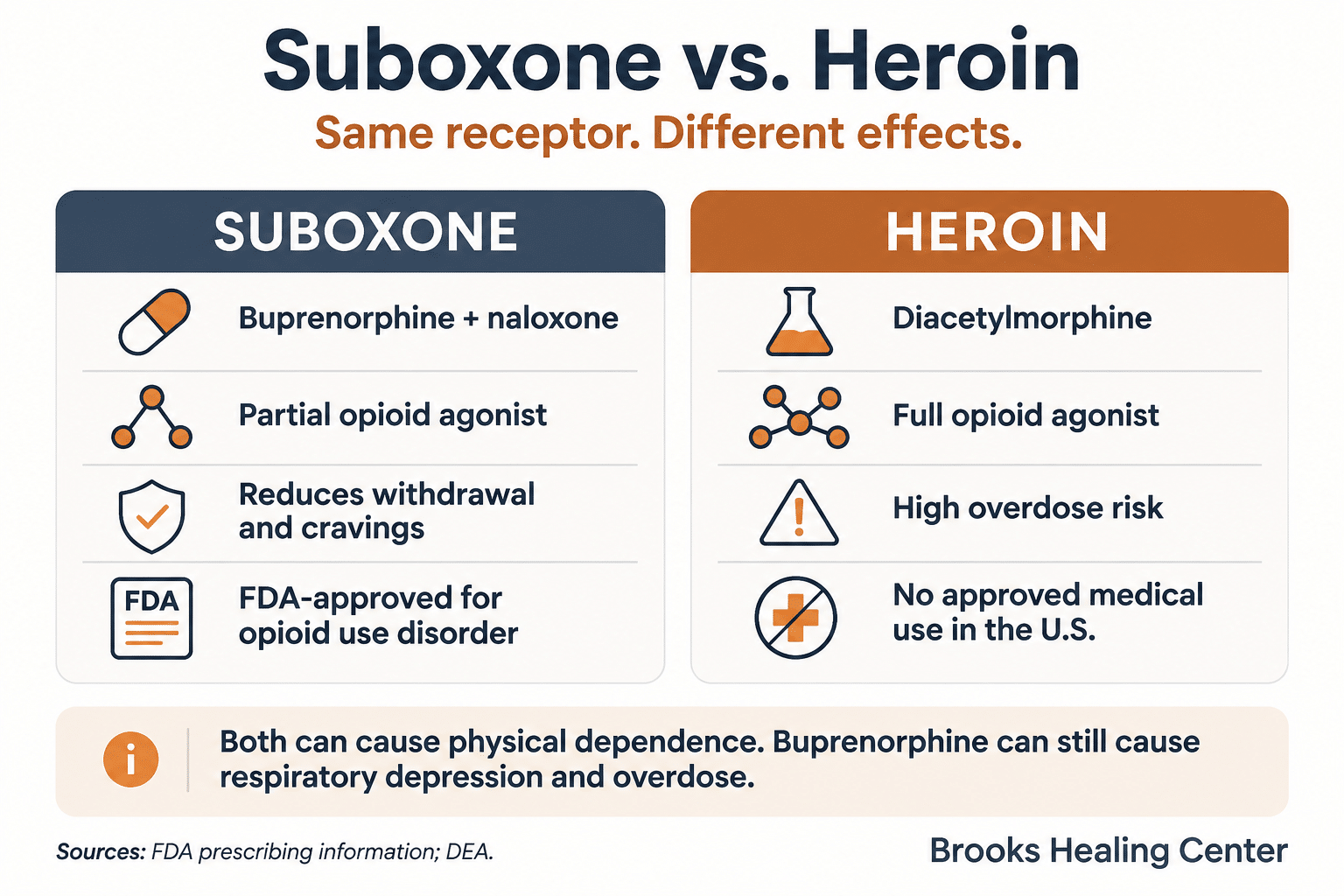
Comparing Suboxone and Heroin
| Characteristic | Suboxone | Heroin |
|---|---|---|
| Chemical composition | Buprenorphine and naloxone | Diacetylmorphine |
| Opioid receptor activity | Partial agonist activity from buprenorphine | Full agonist activity |
| U.S. drug classification | Schedule III | Schedule I |
| FDA-approved medical use | Opioid use disorder | None |
| Potential for euphoria | Present but generally more limited | High |
| Physical dependence | Possible | Possible |
| Withdrawal upon discontinuation | Possible | Possible |
| Respiratory depression | Ceiling effect, although fatal overdose remains possible | High risk |
| Role in addiction treatment | Reduces opioid cravings and withdrawal | No approved therapeutic role in the United States |
Sources: Substance Abuse and Mental Health Services Administration (2021); Indivior Inc. (2025); Drug Enforcement Administration (2024).
Is Taking Suboxone Just Replacing One Addiction With Another?
This is a common concern among people considering medication-assisted treatment, particularly those who have previously attempted recovery without medication. Some worry that taking an opioid every day will prevent them from ever overcoming their addiction. Others feel pressure from family members or recovery communities to discontinue medication before they are ready.
Much of this concern comes from confusing physical dependence with addiction.
Physical dependence develops when the body adapts to the regular presence of a substance. When that substance is suddenly removed, withdrawal symptoms may occur. This can happen with opioids, antidepressants, corticosteroids, and several other commonly prescribed medications.
Addiction involves impaired control over substance use, compulsive behavior, and continued use despite harmful consequences. A person taking Suboxone as prescribed may be physically dependent on buprenorphine without exhibiting those behaviors.
Consider someone who previously spent several hours each day obtaining heroin, recovering from its effects, or experiencing withdrawal. With an effective buprenorphine treatment plan, that person may be able to return to work, care for their children, participate in therapy, and manage responsibilities that became difficult during active addiction.
Their physical dependence may remain for some time, but their relationship with opioids and ability to function can change substantially.
Can You Get High From Suboxone?
Yes. Buprenorphine can produce euphoria, particularly in someone who has little or no existing opioid tolerance. Suboxone can also be misused, which is one reason it remains a federally controlled medication.
For someone with established opioid dependence, an appropriately prescribed dose is intended to relieve withdrawal and cravings without causing significant intoxication. Feeling excessively sedated, euphoric, or mentally impaired while taking Suboxone warrants a conversation with the prescribing clinician.
It is also important to understand that naloxone does not eliminate the potential for Suboxone misuse or overdose. Combining buprenorphine with other sedating substances can be particularly dangerous (Indivior Inc., 2025).
How Effective Is Suboxone for Heroin Addiction?
The effectiveness of buprenorphine has been studied for decades. Research has examined its impact on treatment retention, illicit opioid consumption, withdrawal symptoms, overdose, and mortality.
One of the more compelling findings is the association between continued buprenorphine treatment and survival.
A 2018 study published in the Annals of Internal Medicine followed 17,568 adults in Massachusetts who had survived a nonfatal opioid overdose. Compared with individuals who did not receive medication for opioid use disorder, those receiving buprenorphine experienced substantially lower adjusted mortality hazards.
| Measure | Association with buprenorphine treatment |
|---|---|
| All-cause mortality hazard | 37% lower |
| Opioid-related mortality hazard | 38% lower |
Source: Larochelle et al. (2018). Retrospective cohort study of opioid overdose survivors.
A separate systematic review and meta-analysis published in the BMJ in 2017 examined mortality during and outside periods of opioid agonist treatment. The researchers found lower mortality rates while patients were receiving buprenorphine.
Mortality during and outside buprenorphine treatment
Rates are deaths per 1,000 person-years.
| Measure | During treatment | Outside treatment |
|---|---|---|
| All-cause mortality | 4.3 | 9.5 |
| Overdose mortality | 1.4 | 4.6 |
Source: Sordo et al. (2017), BMJ. Pooled observational mortality rates.
Both studies examined buprenorphine treatment more broadly rather than exclusively evaluating brand-name Suboxone. Their observational designs also mean that the results establish associations rather than proving that medication alone accounts for every difference in mortality.
Nevertheless, the findings support an important clinical consideration. Discontinuing medication prematurely, particularly when someone remains vulnerable to returning to heroin or fentanyl use, can have serious consequences.
What Happens if You Take Suboxone While Heroin Is Still in Your System?
Buprenorphine has a particularly strong affinity for mu-opioid receptors. It can displace other opioids already occupying those receptors, including heroin and fentanyl.
If someone begins taking Suboxone before the effects of a full opioid agonist have sufficiently subsided, the sudden reduction in receptor activation can trigger precipitated withdrawal. Unlike withdrawal that develops gradually as an opioid wears off, precipitated withdrawal can begin abruptly and cause significant physical distress.
Symptoms may include severe nausea, vomiting, diarrhea, sweating, muscle pain, restlessness, anxiety, and abdominal cramping.
The timing of medication initiation requires additional consideration for people exposed to illicitly manufactured fentanyl. A person’s opioid use history, physical symptoms, and clinical condition all influence how a medical professional approaches treatment. Attempting to determine the appropriate starting time without medical guidance can increase the risk of complications.
At Brooks Healing Center, medically supervised opioid detox allows the medical team to assess withdrawal symptoms and determine whether buprenorphine or another treatment approach is clinically appropriate.
Is Suboxone Safer Than Heroin?
When appropriately prescribed and monitored, Suboxone has a more favorable safety profile than heroin. Several factors contribute to this difference, including buprenorphine’s limited respiratory depressant effects, pharmaceutical manufacturing standards, and the ability to adjust treatment based on a patient’s clinical response.
Illicit heroin introduces additional risks. Its potency can vary considerably, and individuals may unknowingly consume fentanyl or other substances mixed into the drug supply.
Suboxone still carries risks of its own. Constipation, headaches, nausea, excessive sweating, sleep disturbances, physical dependence, and dental complications associated with dissolvable oral formulations are among the potential concerns. Combining Suboxone with alcohol or benzodiazepines can increase the risk of respiratory depression and overdose.
These risks should be evaluated alongside the consequences of untreated opioid addiction. For someone with a history of repeated overdose or a prolonged struggle with heroin use, the benefits of medically supervised buprenorphine treatment may substantially outweigh its potential adverse effects.
How Long Do You Need to Take Suboxone?
There is no universally recommended length of time for Suboxone treatment. Some people remain on buprenorphine for several months, while others continue treatment for years.
The appropriate duration depends on the person’s history of opioid use, previous treatment attempts, cravings, mental health, living environment, and ability to maintain recovery outside a structured treatment setting.
A person may feel ready to discontinue medication because they have been abstinent from heroin for six months. However, six months without heroin while receiving buprenorphine does not necessarily establish how they will respond when medication is discontinued. This distinction matters when evaluating whether someone is ready to taper.
When discontinuation is appropriate, the prescribing clinician can develop an individualized tapering plan. Abrupt discontinuation can cause withdrawal and increase vulnerability to returning to opioid use. Reduced opioid tolerance following a period of abstinence can also make a subsequent overdose more likely.
There should be no arbitrary deadline for discontinuing medication simply to satisfy someone else’s definition of recovery.
Are There Alternatives to Taking Suboxone Every Day?
Daily medication can present challenges for some people. Remembering doses, maintaining prescriptions, traveling for work, and safely storing medication are practical considerations that can interfere with treatment consistency.
Extended-release buprenorphine injections offer another option for eligible patients.
| Medication | Active ingredients | Administration | Typical frequency |
|---|---|---|---|
| Suboxone | Buprenorphine and naloxone | Dissolvable sublingual film | Daily |
| Sublocade | Extended-release buprenorphine | Subcutaneous injection | Monthly |
| Brixadi | Extended-release buprenorphine | Subcutaneous injection | Weekly or monthly |
Both Sublocade and Brixadi are FDA-approved medications offered at Brooks Healing Center for eligible individuals with opioid use disorder.
Although these medications contain the same opioid ingredient found in Suboxone, their extended-release formulations deliver buprenorphine gradually. This can reduce the burden of daily medication management and limit opportunities for diversion.
Patients considering injectable buprenorphine should discuss the differences in eligibility, administration, side effects, insurance coverage, and treatment expectations with their medical team.
The Role of Medication-Assisted Treatment in Heroin Addiction Recovery
Medication can address some of the most immediate barriers to recovering from heroin addiction. When someone is no longer experiencing persistent withdrawal symptoms or overwhelming cravings, they may find it easier to engage in therapy and begin addressing the circumstances surrounding their substance use.
For some people, those circumstances involve untreated depression, anxiety, or trauma. Others may have developed opioid dependence after receiving prescription pain medication for an injury or surgical procedure. Years of substance use can also create financial problems, strained relationships, and difficulties maintaining employment.
Buprenorphine cannot resolve all of these problems. It can, however, provide enough physiological stability for someone to begin working through them.
At Brooks, medication-assisted treatment can be incorporated into multiple stages of addiction care. Depending on clinical needs, this may include medical detox, residential treatment, partial hospitalization programming, and ongoing recovery planning.
Frequently Asked Questions About Suboxone and Heroin
Is Suboxone an opiate or an opioid?
Suboxone contains buprenorphine, which is classified as a semi-synthetic opioid. Although people frequently use the terms opioid and opiate interchangeably, opiates traditionally refer to naturally occurring compounds such as morphine and codeine.
Is Suboxone made from heroin?
No. Buprenorphine is derived from thebaine, while heroin is derived from morphine. Both originate from naturally occurring opium poppy alkaloids, but they have different chemical structures and pharmacological properties.
Is Suboxone stronger than heroin?
Strength can refer to receptor affinity, analgesic potency, duration of action, or the intensity of opioid effects. Buprenorphine binds very strongly to opioid receptors, but heroin produces full opioid agonist activity. Comparing the two using a single measure of strength would be misleading.
Does Suboxone block heroin?
Buprenorphine can reduce or block some of heroin’s effects because of its strong affinity for opioid receptors. This blocking effect is not absolute, and attempting to overcome it by taking additional opioids can result in a fatal overdose.
Can you overdose on Suboxone?
Yes. Although buprenorphine generally carries a lower risk of respiratory depression than full opioid agonists, fatal overdoses remain possible. The risk increases when it is combined with alcohol, benzodiazepines, other opioids, or sedating medications.
If an overdose is suspected, administer emergency naloxone if available and call 911 immediately.
Can Suboxone cause addiction?
Suboxone has the potential for misuse and addiction. However, physical dependence resulting from appropriate medical use does not independently establish that someone has developed an addiction to the medication.
Does Suboxone contain fentanyl?
No. FDA-approved Suboxone contains buprenorphine and naloxone. Counterfeit medications obtained outside legitimate pharmacies may contain undisclosed substances, including fentanyl.
Is Suboxone withdrawal worse than heroin withdrawal?
Suboxone withdrawal may last longer because buprenorphine remains active in the body longer than heroin. The severity of withdrawal varies according to medication dosage, treatment duration, individual physiology, and whether the medication is discontinued abruptly or gradually.
Can you be sober while taking Suboxone?
Yes. Taking prescribed medication to manage opioid use disorder is compatible with recovery. Someone’s recovery should be evaluated through their health, behavior, substance use patterns, and overall functioning rather than solely by whether they take a prescribed medication.
Does insurance cover Suboxone and other forms of medication-assisted treatment?
Many commercial health insurance plans provide coverage for medication-assisted treatment, including certain buprenorphine formulations. Coverage varies by policy, medical necessity, provider network, and prior authorization requirements. Learn more about insurance coverage for medication-assisted treatment.
How Brooks Healing Center Helps Individuals Recover From Heroin Addiction
Choosing whether to incorporate medication into addiction treatment can be difficult, particularly when individuals and families have received conflicting information about Suboxone and other opioid treatment medications.
At Brooks Healing Center, located between Nashville and Chattanooga in Normandy, Tennessee, our clinical and medical teams work with patients to determine an appropriate course of treatment based on their substance use history, physical health, mental health, and recovery goals.
Our heroin addiction treatment program incorporates individualized clinical care, evidence-based behavioral therapies, medically supervised withdrawal management, and FDA-approved medications when appropriate. For eligible patients who prefer an alternative to daily buprenorphine, we also offer Sublocade and Brixadi injections.
Whether you are considering treatment for the first time, have experienced multiple returns to opioid use, or want to better understand the medications available to you, our admissions team can help you explore your options.
Contact Brooks Healing Center at 931-486-8824 to learn more about opioid addiction treatment, medication-assisted treatment, and insurance coverage.
Related Resources
- Suboxone detox and medically supervised withdrawal
- Sublocade vs. Suboxone withdrawal
- Understanding precipitated withdrawal
- Verify your insurance benefits
References
Drug Enforcement Administration. (2024). Heroin: Drug fact sheet. U.S. Department of Justice. https://www.dea.gov/sites/default/files/2025-01/Heroin-Drug-Fact-Sheet.pdf
Indivior Inc. (2025). Suboxone (buprenorphine and naloxone) sublingual film: Prescribing information. DailyMed, U.S. National Library of Medicine. https://dailymed.nlm.nih.gov/dailymed/drugInfo.cfm?setid=8a5edcf9-828c-4f97-b671-268ab13a8ecd
Kumar, R., Viswanath, O., & Saadabadi, A. (2024). Buprenorphine. In StatPearls. StatPearls Publishing. https://www.ncbi.nlm.nih.gov/books/NBK459126/
Larochelle, M. R., Bernson, D., Land, T., Stopka, T. J., Wang, N., Xuan, Z., Bagley, S. M., Liebschutz, J. M., & Walley, A. Y. (2018). Medication for opioid use disorder after nonfatal opioid overdose and association with mortality: A cohort study. Annals of Internal Medicine, 169(3), 137–145. https://pmc.ncbi.nlm.nih.gov/articles/PMC6387681/
Sordo, L., Barrio, G., Bravo, M. J., Indave, B. I., Degenhardt, L., Wiessing, L., Ferri, M., & Pastor-Barriuso, R. (2017). Mortality risk during and after opioid substitution treatment: Systematic review and meta-analysis of cohort studies. BMJ, 357, j1550. https://www.bmj.com/content/357/BMJ.j1550
Substance Abuse and Mental Health Services Administration. (2021). Medications for opioid use disorder: Treatment Improvement Protocol (TIP) 63. U.S. Department of Health and Human Services. https://library.samhsa.gov/sites/default/files/pep21-02-01-002.pdf